
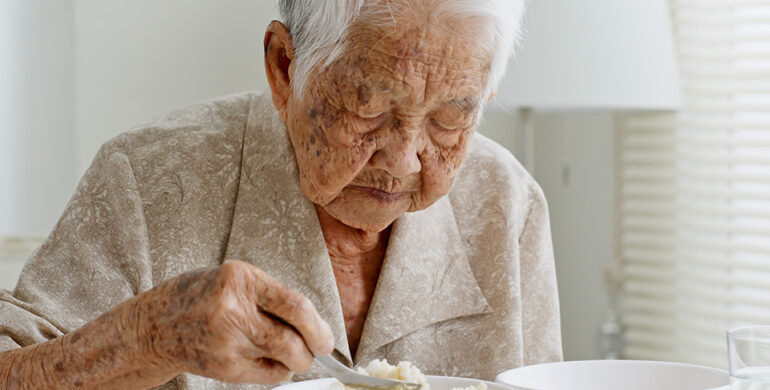
When we imagine malnutrition, we often think of an empty plate. But for many older adults in our community, malnutrition doesn’t hide in hunger—it hides in plain sight, on a plate that looks completely full.
This phenomenon is known to geriatric experts as “Hidden Hunger.” It occurs when a senior is getting enough calories (energy) to maintain their weight, but is critically deficient in the vital micronutrients—vitamins and minerals—their body needs to function, repair itself, and ward off disease.
For caregivers, understanding Hidden Hunger is crucial, because it means that simply checking “eating” off your daily checklist is not enough. To truly nurture the health of our elders, we must shift our focus from quantity to quality.
Why Does Hidden Hunger Happen in the Elderly?
Hidden Hunger isn’t just about poor food choices. It is usually caused by a complex cocktail of physical, medical, and lifestyle changes that naturally occur as we age.
1. The “Absorption Factor” Change
As we get older, our bodies become less efficient at absorbing critical nutrients from the food we eat. The digestive tract’s ability to process Vitamin $B_{12}$, for example, drops significantly. Even if an elder is eating meals rich in $B_{12}$ (like fish or meat), their body may only be absorbing a fraction of it. This is why standard intake guidelines often fall short for seniors.
2. Physiological Changes (Appetite & Senses)
The hormonal signals that tell us we are hungry decrease, meaning seniors genuinely feel full faster. When they do eat, a reduced sense of taste and smell (common with age or as a side effect of medication) makes food less enjoyable. Consequently, they tend to gravity toward “bland” comfort foods that require less effort—often starchy items like bread, crackers, or plain pasta—rather than vibrant, nutrient-rich vegetables and proteins.
3. Medical Interventions and Medications
This is where the “hidden” medical concern lies. A senior might be taking diuretics for blood pressure, which can flush essential minerals like potassium and magnesium from the system. Antibiotics, acid reflux medications, and others can all interfere with nutrient absorption. If a senior is managing multiple chronic conditions (polypharmacy), their nutritional foundation is often already compromised.
4. Physical Challenges with Food Prep
Sometimes, Hidden Hunger is purely practical. If arthritis makes chopping vegetables painful, or if poor vision makes reading cooking instructions difficult, a senior is more likely to choose pre-packaged, microwaveable meals. These options are often high in sodium and calories but low in the essential vitamins their body needs.
How to Help: The NGO and Caregiver Approach
Combating Hidden Hunger requires a deliberate, nutrient-first approach. Here is where caregivers and our NGO can make a difference.
The NGO’s Role:
- Targeted Assistance: Our food programs are shifting focus. We aren’t just providing food bulk; we are curating nutrient-dense packages and partnering with local farms to supply accessible, fresh, high-vitamin produce.
- Medical & Nutritional Audits: We are working to connect seniors with geriatric specialists who can run specific vitamin panel blood tests to identify exact deficiencies.
The Caregiver’s Role:
- Audit the Plate, Not the Person: When you observe your loved one eating, look at the color distribution on the plate. Are you seeing greens, oranges, and deep reds (the signs of micronutrients), or mostly browns and whites (carbohydrates)?
- The Power of Supplements: While food is the best source, Hidden Hunger often requires supplementation, but only under medical supervision. Never start a supplement program without a blood test; you could create dangerous imbalances or interfere with existing medication.
- Stealthy Nutrition: Think “nutrition density.” Add nutrient powders to drinks, puree spinach into sauces, or use bone broth instead of water. Every bite must count.
Conclusion
Malnutrition in the elderly isn’t always obvious. It is a quiet, underlying threat that erodes vitality, immunity, and independence. If you notice your loved one seems unusually fatigued, has slow-healing wounds, or has trouble focusing—even though they “eat well”—it may be time to ask their doctor to screen for Hidden Hunger.
By moving beyond the empty/full paradigm, we can ensure our elders are not just sustaining life, but truly thriving.